Pos System for Small Business : The Point-Of-Sale System Simplifies Checkout Processes Efficiently
Unloading the Power Behind Point of Sale Systems
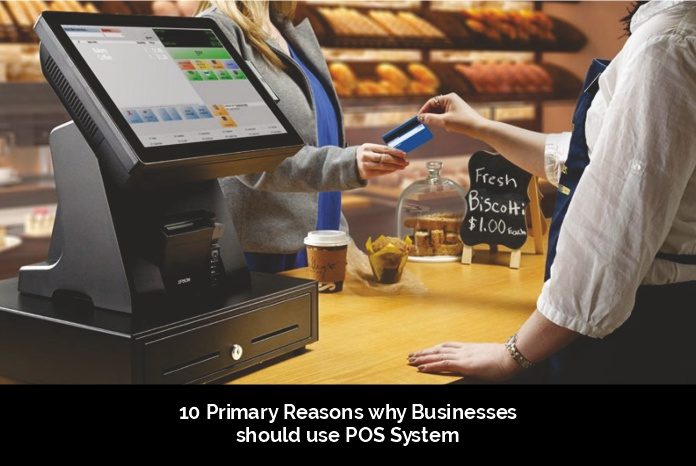
Have you ever stopped briefly to consider what takes place the moment you swipe your card or tap your phone at a checkout? That split second activates a cascade of procedures, orchestrated by advanced Point of Sale Systems. Far from being mere cash registers, these systems serve as the digital heartbeat of retail operations, weaving together sales data, stock, and consumer interaction.
Envision a bustling coffee shop where the barista handles orders, payments, and loyalty rewards all at once. The POS system isn't just a tool-- it's the hidden partner making sure every cappuccino is represented, every discount used correctly, and every client leaves satisfied. Restaurant POS. It's the difference in between turmoil and seamless service
Core Functions That Drive Efficiency
- Sales Transaction Management: Tracks each purchase with accuracy, ensuring accuracy in billing and invoices.
- Stock Control: Automatically updates stock levels, signaling when it's time to reorder.
- Client Data Collection: Gathers insights for tailored marketing and loyalty programs.
- Worker Tracking: Schedules shifts and records hours worked.
Why Does This Matter?
Think of the last time you waited in a long checkout line. Discouraging? A well-implemented POS system slashes wait times by improving payment procedures, lowering human error, and syncing sales with backend operations in real-time. It's like having a conductor assisting every note in the symphony of retail.
| Function | Benefit | Effect |
|---|---|---|
| Real-Time Analytics | Instant sales reporting | Better decision making |
| Mobile Compatibility | Checkout anywhere | Boosted client experience |
| Integrated Payments | Numerous payment options | Increased sales chances |
Does not it make you question how companies ever managed without these systems? In a world where every second counts, the POS is no longer just a benefit-- it's a need.
Decoding the Celestial Puzzle
When peering into the night sky, have you ever questioned how ancient mariners identified their area without modern technology? Positional astronomy is the art and science behind that celestial navigation. However why does comprehending the exact position of stars and planets matter? Because even a minute miscalculation can send you miles off course, especially when depending on the stars as your compass.
The Subtle Complexities of Coordinate Systems
One might think the sky is a simple canvas, but it's a dynamic sphere dotted with moving targets. The equatorial coordinate system. Point of Sale Software-- best ascension read more and declination-- mimics Earth's own location, but with a twist. The Earth's axis wobbles, a phenomenon called precession, which subtly moves star positions over decades. This requires constant recalibration. Have you ever observed how Polaris doesn't always sit exactly at the North Celestial Pole? That's precession at work
Tips from the Observatory
- Utilize a high-precision chronometer to determine sidereal time properly; even seconds matter.
- Calibrate your instruments frequently to account for atmospheric refraction, particularly near the horizon.
- Cross-check star brochures-- different dates can yield differing collaborates.
- Employ software application that elements in nutation and aberration for contemporary accuracy.
Remarkable Anecdote
Consider the tale of a 16th-century navigator who, using primary tools and naked-eye observations, computed his ship's position with unexpected precision. His secret? Mastery of celestial mechanics and a deep understanding that the stars, though relatively fixed, belong to a cosmic dance.
Accuracy Demands Perseverance
Trying to determine a star without thinking about atmospheric distortion resembles trying to read a book through a frosted window. Even the finest telescopes can be tricked by the environment's unpredictable layers. Perseverance, numerous observations, and averaging results frequently unveil the real positional information. Isn't it interesting how the sky's apparent stillness masks such intricate shifts?

Decoding the Essence of Favorable Operator-Valued Steps
Envision attempting to capture a shadow's true shape in a world where light bends unexpectedly. Favorable Operator-Valued Measures (POVMs) carry out a comparable task in quantum mechanics-- measuring states where classical intuition stops working. Unlike the cool sharpness of projective measurements, POVMs allow a richer tapestry of results, weaving possibilities from operators that aren't always orthogonal. Why settle for the ordinary when you can paint with the complete combination of quantum possibilities?
Quantum Measurement Beyond Conventional Boundaries
Conventional measurements feel rigid, however POVMs use flexibility. In practice, they emerge from coupling a system with an ancilla, then performing projective measurements on the combined system. This technique extends the horizon of what can be observed. Ever questioned how to optimize details extraction without troubling fragile quantum states? POVMs are the secret.
- Non-orthogonality: Unlike projectors, POVM aspects overlap, making it possible for nuanced detection methods.
- Completeness: The amount of all POVM components equates to the identity operator, guaranteeing overall likelihood.
- Physical Realizability: Any POVM can be executed through Neumark's dilation theorem, connecting abstract mathematics to laboratory experiments.
Expert Tips for Navigating POVM Execution
Handling POVMs in practice isn't unimportant. Quantum noise and decoherence sneakily distort your ideal operators. To combat this:
- Design POVMs tailored to your speculative setup-- customization beats one-size-fits-all whenever.
- Usage convex optimization algorithms to find the ideal POVM that makes the most of details gain for your quantum state discrimination task.
- Keep in mind, the subtle interaction in between operator positivity and measurement completeness governs the trade-off in between accuracy and disturbance.
Unseen Intricacies in POVM Applications
What does it imply when a POVM element is favorable but not a projector? This subtlety frequently perplexes newcomers but exposes an extensive fact: quantum measurements do not need to be sharp to be informative. In cryptographic procedures, for example, utilizing POVMs rather of projective measurements can boost security by extracting info more gently, leaving less traceable disturbance.
| Function | Projective Measurement | POVM |
|---|---|---|
| Operator Type | Orthogonal Projectors | Positive Semidefinite Operators |
| Measurement Results | Fixed, sharp | Flexible, probabilistic |
| Implementation | Direct on system | Requires secondary systems |
| Information Extraction | Sometimes limited | Optimizable and richer |
Comprehending the Intricacies of Evidence of Stake
Think of a world where blockchain validators don't race to resolve puzzles but rather stake their properties, signaling trust and dedication. This is the essence of the Evidence of Stake (PoS) system. Underneath its sophisticated surface lies a complicated dance of rewards and security steps. Why does staking more tokens increase your opportunity to confirm the next block? Because it lines up economic incentives, making efforts to defraud the network excessively pricey.
The Subtle Dangers of Stake Centralization
One might ask: could a handful of stakeholders overpower a network? The concentration of staked tokens in few hands may alter the decentralization suitable, causing oligarchic control over block production. This isn't just theoretical; it's a real stress in PoS systems. Reliable networks neutralize this by executing systems such as:
- Slashing conditions that penalize harmful stars by taking staked tokens
- Randomized validator selection to prevent predictability
- Entrusted staking designs enabling token holders to delegate others without relinquishing ownership
Professional Tip: Timing Your Stake
Seasoned validators know that timing can be whatever. Joining the staking pool too early or late can affect benefits substantially. Network dates define windows where staking and recognition take place-- missing out on these might imply surrendering earned rewards. Always synchronize your staking activity with the network's epoch schedule to make the most of yield.
Energy Efficiency and Security: A Fragile Balance
| Aspect | Proof of Stake | Proof of Work |
|---|---|---|
| Energy Intake | Very little, sustainable | High, resource-intensive |
| Attack Cost | Stake loss, economic disincentive | Pricey hardware and electricity |
| Block Finality | Faster due to economic locks | Slower due to probabilistic confirmation |
Rethinking Security Assumptions
One frequently neglected element is the "nothing at stake" predicament. Validators might be lured to sign numerous completing chains, given that it costs them nothing straight-- unlike Evidence of Work where energy expenditure discourages this. Advanced PoS systems solve this with penalties and checkpointing, making sure validators stake their track record as much as their tokens. Have you considered how this impacts your rely on a network?
Point of Sale Solutions in North Carolina
North Carolina is a vibrant state understood for its varied economy and abundant cultural heritage. With a population going beyond 10 million, it boasts growing metropolitan centers such as Charlotte and Raleigh, which are hubs for finance, innovation, and education. Visitors and citizens enjoy destinations like heaven Ridge Mountains, historic websites in Asheville, and the stunning Atlantic shoreline. The state also has a strong entrepreneurial spirit, making it an ideal environment for organizations to adopt efficient point of sale systems to simplify operations and boost consumer experiences.
For skilled guidance and a free assessment on point of sale options, reach out to Brilliant POS. They supply knowledgeable assistance tailored to your specific business needs.